

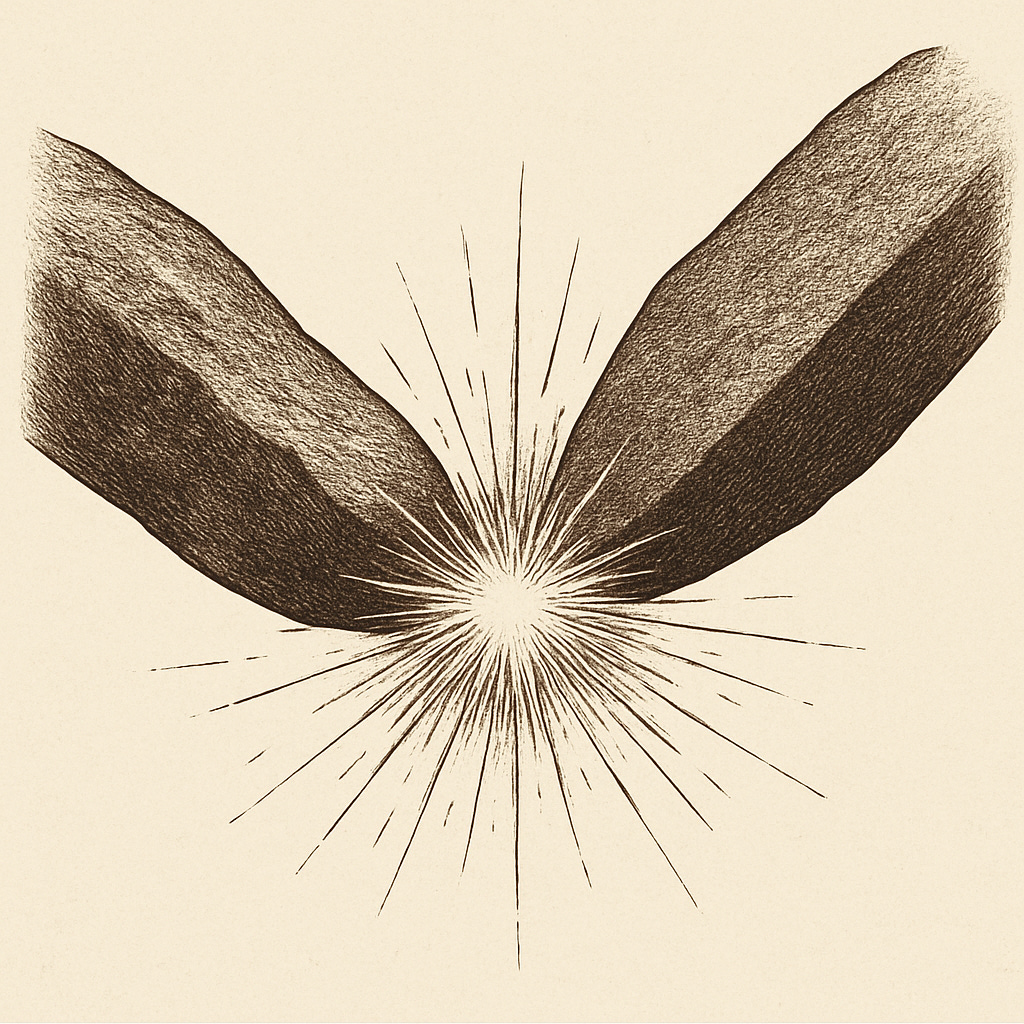
Friction is not incidental to culture: it is the mechanism by which inert material becomes meaning. The act of resistance, delay, and effort is what binds human beings to artifacts and to one another. To confuse friction with inefficiency is to mistake the foundation of meaning for a defect to be optimized away. In every civilizational form, the presence of friction in the transmission of meaning has been the guarantee that what was transmitted would matter.
This intuition has appeared in fragments across intellectual history. Walter Benjamin diagnosed how reproducibility diminished the “aura” of the artwork, but he treated aura as something lost to technology, not as the necessary effect of friction. Marshall McLuhan showed how the medium itself is the message, but he did not follow through to identify resistance in transmission as the generator of meaning. Pierre Bourdieu traced how scarcity, access, and ritual produced cultural capital, but his frame was sociology of status rather t…
